Telegraph Internship/ Estágio no Telegraph

EN/   Telegraph Internship

Screen Shot 2015-12-04 at 22.34.44

This internship came across to me via my university’s career department, and grabbed my attention in many ways. Firstly because it is to work in a Picture Desk, and not any Picture Desk, it is for Saturday Magazine and Stella Magazine, both part of The Telegraph Media Group. Other thing that grabbed my attention is the unique chance this can represent to me, a paid internship in the Photography area I want to get into, in such renowned company.
Continue reading

Necrotourism/Necroturismo

EN/   Necrotourism

PT/   Necroturismo

Screen Shot 2015-11-17 at 20.09.57

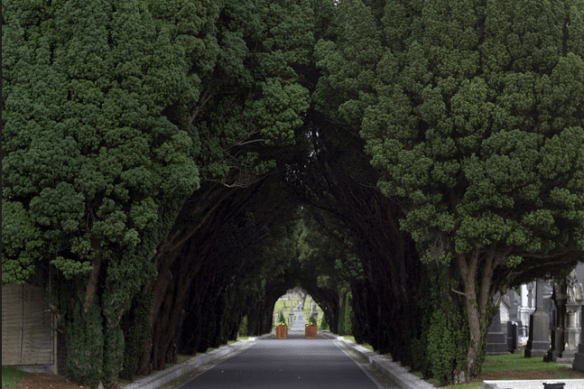
Glasnevin, Dublin

The term “Necrotourism” refers to getting to know cemeteries, tombs, mausoleums and etc, abroad in new cities you visit. You might gave this interest due to their architecture, Art, sculptures, or even because there are iconic figures of history, literature, music and so on.

Would you be interested in doing that?
Would you be able to walk normally around graves?

When I first got into this, I wasn’t even aware it was a practice. When I travelled to Venice in March 2011, I got to know there is an island called San Michele which is taken entirely by a cemetery. I took a ferry there and went exploring, and what a peaceful place away from tourists and Carnival celebrations.

PT/ O termo “Necrotourism” refere-se a conhecer cemitérios, túmulos, mausoléus e etc, no estrangeiro, em novas cidades a visitar. Você pode ter esse interesse devido a sua arquitetura, arte, esculturas, ou mesmo porque há figuras icônicas da história, literatura, música e assim por diante.

Você se interessaria em fazer isso?
Conseguiria andar normalmente entre túmulos?
Continue reading

Nuclear Family/Família Nuclear

EN/   Nuclear Family

scan175

The idea that a structured family seems perfect, conflicts of other families that aren’t in this group stipulated by society, how they differ and crossover came to my solo mental discussions. This made me choose “The Nuclear Family and its Conflicts” as my project’s theme in May 2013.

Having this theme in mind, I wanted then to use my creativity and an appropriated process to make a visual work based on my comments, analysis and critiques.Through this work, I wanted to show how we are led to stereotype certain types of families, what activities are linked to family members either nuclear or not, the good and bad all with some kind of sense of humour.

To be able to make thoughts visual with more facility to manipulate details, I imagined that using Image Appropriation would match perfectly with my work, not only because I can mix varied imagery and materials, but also because I have experimented it by making collages previously to communicate my ideas in an artistic way.

When making collages, the process of gathering imagery and materials is very important, so I used all the magazines and leaflets I had as source. Other materials like, cardboard, sugar paper, chocolate papers/package and unwanted prints were used to certain details and support on my compositions. It was very important to have an idea in mind, it prevented from getting stuck when choosing images. Having it, I started looking only at relevant things linked to family relationships and activities, related objects and text to support. The decision to make collages gave me the flexibility to play, move and change images and their meanings, juxtaposition, cover and hide, all in a very detailed way to express my critiques on the theme.

See the project on my Flickr album

Seven collages were produced for this portfolio as an outcome, and each one has its individualities, details and messages to the viewer:

Collage 1, I tried to illustrate what society determines a “Real Life” or “Real Family” should look like, by referring to family admission tickets formed of 2 adults and 3 children. Visually, I mainly used a family photo in a frame, a museum’s leaflet cutout of the family pack price and “Real Life” text.

Collage 2, is inspired on a magazine’s article about domestic violence against women, telling that scalding coffee was splat on her by husband. Visually, I used their photos, and played around with word cross, coffee mug and biscuits as scenario for the violence, “Coffee Break” as text.

Collage 3, is about a family together having fun, showing that differently to Collage 1 real family, there are other families and structures. Visually, I used golden bars as pillars under iron structures where the family is playing, which signifies that they depend on the structure to keep harmony and economical comfort.

Collage 4, shows an other side, represented by a single/divorced mum, who needs to take care of kids, home, work and her own all by herself. Visually, I added her many arms holding different objects each signifies different activities, a halo made by an architectural image was positioned behind her head, referring her as the ideal mum, even under disadvantaged conditions, as “Madonna and Child” painting, a Saint or super mum.

Collage 5, is based on the idea that well structured families are more likely to offer more comfort and extra activities to their kids. Visually, I created a hyperactive girl with ballet shoes, ballet tutu made with chocolate paper and swimming glasses, in a bedroom.

Collage 6, is inspired on what I noticed with people I know with more stability, for this reason they spend more time and money to get involved with decorating their rooms as a nest that will last for a long while. Visually, I collected different coloured stripes put together, as well as classic textured wallpaper, lace and decorative flags. Traditional frames were put over them to show that they are on a wall; the collage is on a wall.

Collage 7, is a reflection to Collage 6, which was my view on other people’s rooms. Now looking at what I think about my room and life, the feeling that I am always about to move elsewhere once again, I never decorate my room, which makes it look very plain. Visually, I made a frame of spray paint to show how little my room is personalised; it also gives a clue that it refers to a room as it has 4 sides. Spray tins on the side to show that I have the will to be able to put more of myself on the walls. Binoculars looking at stars stuck on them, to signify my dreamy and creative personality that is not always materialised as decoration, but kept in my mind.

Working on this project helped me to translate my thoughts, analysis that I don’t share too often into a visual work, being selective with relevant images that could work with my theme, practicing composition in a tactile way, make my own decisions to manipulate how I wanted the final image to be, adapt not so obvious materials to be part of the context. Overall this project taught me to express myself in a different medium, using different tools and materials to communicate what I have to say.


PT/   Família Nuclear

A idéia de que uma família estruturada parece perfeita, os conflitos de outras famílias que não estão neste grupo estipulado pela sociedade, como eles diferem e contrastam veio em minhas discussões mentais. Isso me fez escolher “A Família Nuclear e seus conflitos”, como tema de meu projeto em Maio de 2013.
Continue reading

Melancholy/Melancolia

Screen Shot 2015-10-09 at 14.56.30

Melancholy, Presence of Absence

EN/   Melancholy

Today is World Mental Health Day, so I decided to contribute to the Awareness week by posting a project I developed at university in 2014. It was the first week of Year 2, Semester 2 and we had to get into groups depending on the subjects we would work on to create a photography artefact to be exhibited in a gallery. I wanted to work on something related to the fading of time, passage or memory somehow. That was when some students approached with their initial ideas of working with family and loss. At first I felt I wouldn’t fit into the group, and that I didn’t wanted to work with such tense subject, but then realised it could be related to the feeling I had about time, more or less related to family, generations and loss that are always present  in a way in my life.

Analysing this I noticed that I could work on something I have been thinking about a lot in that past months, which is the fact that I am melancholic and through the years I felt it in different ways and have to deal with a contrast of feeling it brings me. For these past months I read a lot on this state of mind/being, before deciding working on it for a photography project, which helped me to understand how I feel it, making me see it in a good inspirational way, as part of the person I am.

There is no reason to feel melancholic, but once I feel it, it is like being drag back to things in the past that can never come back, or simply the fact that in the present I am having either good or bad time, and can´t be with people I used to, loved ones that are far away and neither I can be part of their life totally and neither they can be present on mine. Due to leaving my country in the age when you get your best friends, moving around many times and not being able visit them and family members also, always have this melancholic feeling. This made the exhibition called “Presence of Absence”.

I decided to read more about this to be able to develop my project, looking at Ancient Greek and Roman Mythologies which I have always been interested on and that have a peculiar view on this subject. Mourning and Melancholia by Sigmund Freud, which was complex to read but helped me a lot to see specially the differences and similarities between these two feelings that our theme involves. I noticed that like me other people see it in good and bad way, sometimes choosing only one side of it, but in my case I deal with both and think both are important to live so that I develop myself as a person and end up having something constructive from it.

The set of photographs is portraying in an abstract way the state of mind of Melancholia with similarities and differences to the loss/mourning feeling. The fear of loss and constant knowledge of the existing or future absence from someone’s life is present on my life and having to deal with it inside is what inspired to produce the work. Approaching the different ways this feeling gets personally manifested, I interpreted them making emotion visual by using distinctive medium and tones: one brutal & extremist (using medium format camera with B&W film) and other inspirational & poetic (photographing digitally and in colour).

See the project on my Fickr album, Presence of Absence


Here are some research I did and reading suggestion on the theme:

“The melancholic in contrary of someone who tries to hide their weaknesses, find through an extremely self critical behaviour, a profound self knowledge.”  Freud

Theories before the Renaissance, linked Saturn and melancholia.

Ancient Greek and Roman Mythologies

The Romans identified Saturn with the Greek Cronus, whose myths were adapted for Latin literature and Roman art. In particular, Cronus’s role in the genealogy of the Greek gods was transferred to Saturn.

Saturnalia festival in the Roman calendar led to his association with concepts of time, especially the temporal transition of the New Year. In the Greek tradition, Cronus was often conflated with Chronus, “Time,” and his devouring of his children taken as an allegory for the passing of generations. The sickle or scythe of Father Time is a remnant of the agricultural implement of Cronus/Saturn, and his aged appearance represents the waning of the old year with the birth of the new.

Saturn in Astrology

Saturn takes rulership of the signs that govern midwinter, like Capricorn. Therefore governs the melancholic temperament in these individuals. The colours of Saturn are those that want for the vibrancy of additional hues, being typically dark and black (Saturn’s contact can add an element of darkness to other colours), white and pale, or a grey, ashy colour. They do not display their emotions easily, but their emotions, like their imaginations, can be profound. Such individuals are observably deep, sincere, and generally gather respect.

Walter Benjamin on Origine du Drame Baroque Allemand
The influence of Saturn makes people “apathetic, indecisive, slow”
“ I came into this world under the star of Saturn- the star of the slowest revolution, the planet of detours and delays…”

Susan Sontag on “Under the Sign of Saturn”:
“Slowness is one characteristic of the melancholic temperament”

Victor Hugo “Melancholy is the happiness of being sad.”

“Saturn and Melancholia” Authors: Klibansky, Panofsky and Saxl
“The planet Saturn commanded the days in which human’s vital energy would get minimized, turning them almost infertile.”

Pictorialism symbols: hand holding head, Durer painting

Lars von Trier’s film, Melancholia

Literature, W.S. Sebald “Rings of Saturn”

Italo Calvino “Melancholy is sadness that has taken on lightness.”

Aristotle explained brilliance of mind and the exceptionality of great men in literature, politics, philosophy and the arts in terms of melancholy, that all those who have become eminent in philosophy or politics or poetry or the arts are clearly melancholics.

Freud, “The melancholic in contrary of someone who tries to hide their weaknesses, find through an extremely self critical behaviour, a profound self knowledge.”


PT/    Melancolia

Hoje é o Dia Mundial da Saúde Mental, então eu decidi contribuir para a semana de consciência postando um projeto que eu desenvolvi na faculdade em 2014. Foi a primeira semana do segundo ano, no segundo semestre e tivemos que entrar em grupos, dependendo dos assuntos que iriámos trabalhar e criar um artefato fotográfico para ser exposto em uma galeria. Eu queria trabalhar em algo relacionado com o passar do tempo, mudanças ou com memória de alguma forma. Foi quando alguns alunos se aproximaram com as suas idéias iniciais de trabalhar com os temas, família e perda/luto. No começo eu senti que eu não iria me encaixar no grupo, e que eu não queria trabalhar com um assunto tão tenso, mas depois percebi que esses temas poderiam estar relacionado com o tempo, mais ou menos relacionadas à família, gerações e perda que estão sempre de uma forma na minha vida.

Continue reading

A Letter to Editors/ Uma Carta para os Editores

EveningStandard

Uncredited Image/A Letter to Editors

EN/   A letter to Editors

If you grabbed a copy of the Evening Standard on the 30th July 2015, you would find a copy of an uncredited image of mine! The article featured the Wembley to Soweto’s exhibition, at The Hospital Club Gallery in Covent Garden on 20th to 24th August 2015.

“Dear Editors,

Today I got really excited to have my first photograph published in a newspaper with great visibility like Evening Standard. In News, the article written by Miranda Bryant, it has been featured the upcoming exhibition at The Hospital Club, of the photographs taken during the Wembley to Soweto project in Brazil World Cup 2014, in which I participated as a photography mentor together with John Cole and David Westhead. These photographs were also exhibited in Sao Paulo’s British Embassy and at the Community Centre in the Colombo Favela where we were based.

I can not stress how much I felt disappointed with the fact that my photo, on the left side of the text, did not get credited, neither at least I got a mention on the text as Thapelo did for his image on the right hand side.

For an emerging photographer like me, it is difficult to get the chance of having a photograph published like this, and my chance of visibility and prestige for the work I produced with Wembley to Soweto, has been taken from me with the simple fact of ignoring the authorship of the image, which would have been easily mentioned here.

For some, photographs are just illustrations next to an article. For photographers, they are the result of our dedication to our careers, just like I believe articles and publications are for editors and journalists.

I expect a rapid response on this issue, a respectful and satisfying way of compensation towards me.

Regards,

Tariana Pestana “

And as a response I received:

“Dear Tariana,

I’m really sorry you were disappointed that we didn’t mention your name. The images were provided by the people who are doing PR for the exhibition and there was no suggestion that the inclusion of credits was obligatory. I’m afraid it isn’t something we do as a matter of course for every picture we publish.

Our picture editor has said he would be prepared in the circumstances to pay you a fee to mitigate your disappointment.

Kind regards
Will Gore
Deputy Managing Editor
London Evening Standard, The Independent, & Independent on Sunday “

It is quite upsetting really, having to chase for your own rights. Enough is said, but maybe not enough has been done to prevent it.

Photograph from Brazil 2014 project, on Wembley to Soweto Workshop during Brazil 2014 World Cup. See all photos on my Flickr.


PT/   Uma carta aos Editores

Se você pegou uma cópia do Evening Standard no dia 30 de julho de 2015, você teria encontrado uma cópia com uma foto sem créditos a mim! O artigo destacou a exposição Wembley to Soweto, no Hospital Clube Gallery em Londres, Covent Garden em 20-24 agosto de 2015.

Continue reading